
Published by California Dating Guide
A local dating pool can extend beyond the city center
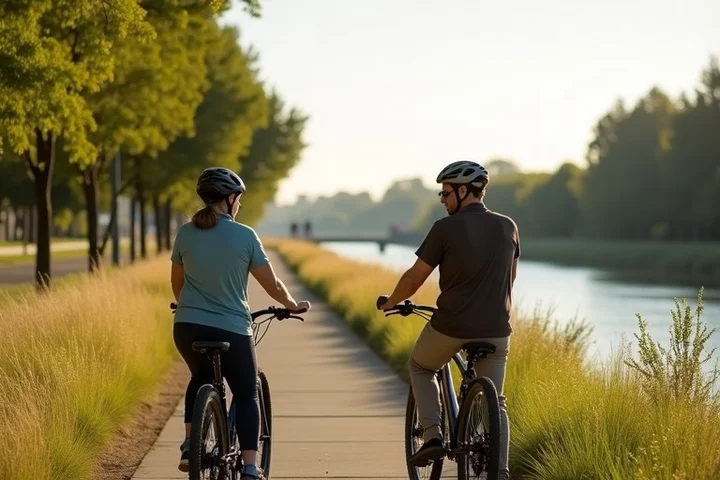
The useful question is not whether a potential date lives in Sacramento proper, but whether the two of you can make the same parts of the region part of a normal week. A person whose routine centers on Midtown or East Sacramento may have easy access to downtown events and neighborhood gatherings. Someone in Elk Grove, Folsom, West Sacramento, or another nearby community may still be well within a realistic dating radius, but the shared route needs to fit work hours, transportation, and the kinds of plans each person actually enjoys.
That distinction changes how to meet people. If weekday availability is limited, prioritize activities close to home or along a route you already travel; familiarity can develop without every conversation requiring a special trip. If you are comfortable making occasional regional plans, widen the search through larger events or interest groups, then notice whether a second meeting would still be practical. The point is not to draw a rigid boundary around Sacramento. It is to build a social pattern that can continue after an initial introduction.
Finding events with a usable social format
- Check who the event is for. An event aimed at an existing club, a professional field, families, or a tightly defined audience can still be worthwhile, but it may not offer many natural openings for new conversations. Choose an audience you could plausibly see again rather than attending solely because the event is large.
- Read the organizer details. A clear description of the host, purpose, schedule, and expected participation usually makes it easier to decide whether you will have a role beyond arriving and leaving. A structured activity, shared task, or discussion creates more conversational material than a setting built entirely around watching.
- Notice registration and commitment. Registration can signal a defined start time, a predictable group, or a limited space. A drop-in format may be easier to try once. Neither is automatically better: use a recurring registered activity when familiarity matters, and use an open event when you are testing a new neighborhood or interest.
- Confirm access before making it your route. Consider the time, parking or transit options, distance from your regular routine, and whether the setting allows people to stay briefly after the programmed portion. An event that is appealing on paper but difficult to reach on a weeknight is less likely to become a useful social habit.
- Ask whether conversation is built in. A packed performance, a short lecture, or a fast-moving outdoor activity may be enjoyable without being especially social. Look for arrival time, breaks, small-group participation, or an informal close to the event. Those intervals are often where an introduction can turn into an actual exchange.
Season and travel shape the plan
A Sacramento social plan benefits from a calendar rather than a permanent assumption about where people will gather. Outdoor activities can be more appealing when conditions are comfortable, while hotter stretches, rain, holidays, and school or work cycles can move plans indoors, later in the day, or onto weekends. When an outdoor program is advertised, confirm its current schedule instead of treating seasonal programming as guaranteed.
Travel has a similar effect. Two people may be open to meeting across nearby communities, yet find that weekday timing makes the arrangement feel different from a relaxed weekend plan. If a downtown event is convenient for one person but requires a long return trip for the other, use it as an occasional meeting point rather than the only option. A workable rhythm usually includes both an accessible local choice and a reason to make the longer trip when it is worthwhile.
Three starting routes
If your goal is to make meeting people feel natural within a busy week, start with a neighborhood route: choose a recurring local activity, a public gathering, or a routine where you can become recognizable. This route narrows the immediate radius, but it reduces travel friction and gives conversations a chance to resume.
If you want to sample a broader cross-section of Sacramento, take an event route. Select a few downtown or neighborhood events with a clear social format, arrive early enough to talk, and judge the event by whether it produces follow-up opportunities rather than by the size of the crowd. This works best when you can realistically return to a similar gathering.
If a particular interest matters more than location, take an interest route through a class, recreational activity, volunteer effort, or arts and civic program. The first meeting may be farther from home, but a shared reason for attending can make distance more manageable. Choose this branch when you would continue participating even if no date emerged immediately; that is what keeps the activity from becoming a one-night search.
Where repeat participation creates familiarity
Repeat participation is especially useful when the first conversation is brief or tentative. A community class gives people a shared skill or project to discuss; volunteering gives them a practical task; recreation supplies an ongoing activity; civic and arts participation creates a reason to exchange views or help with the next gathering. In each case, seeing the same people again lowers the pressure to make an immediate impression.
The consequence is not that every recurring activity becomes a dating venue. It is that a person can build a Sacramento social route in which introductions have context. When a class, volunteer shift, recreational group, or arts or civic activity fits your neighborhood and travel pattern, return often enough to learn who is part of the community. That steady familiarity is usually more useful than chasing a different citywide event every week.